
Castallio

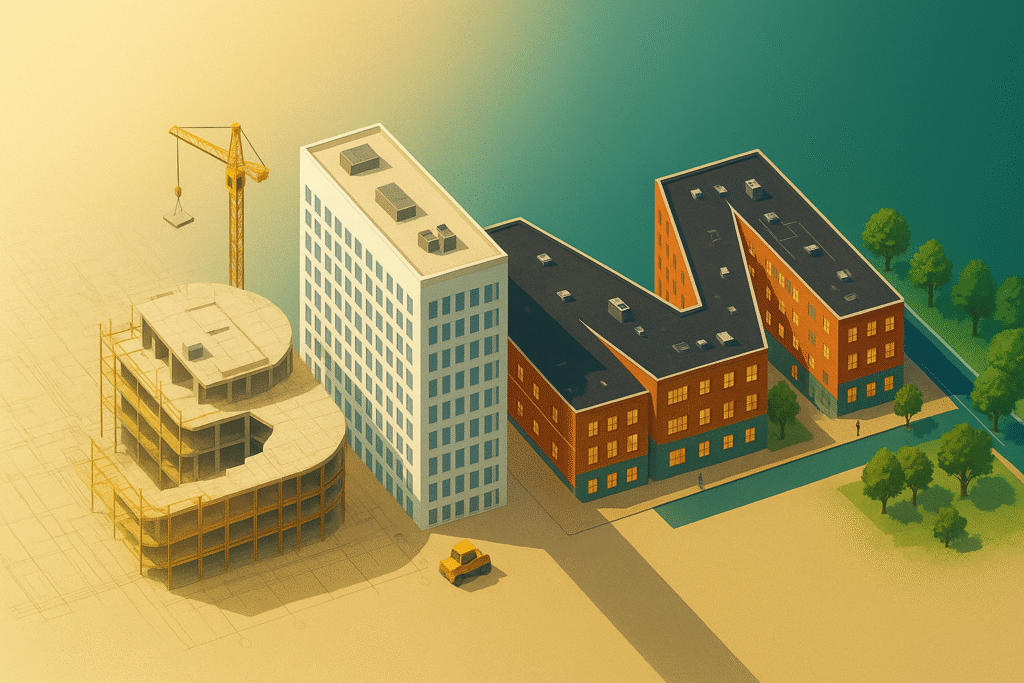
smart hospital image

How IoT, AI, and BIM Are Powering Data-Driven Smart Hospitals in 2025

By 2025, hospitals will no longer be just healthcare buildings. They will have evolved into intelligent ecosystems that depend on data, connectivity and automation. The alignment of IoT (Internet of Things), Artificial Intelligence (AI) and Building Information Modeling (BIM) has transformed facility management from being reactive, unsustainable and patient-centric to predictive, sustainable and patient-centric.   Hospitals today use real-time data and digital twins as a basis for making decisions on how to optimally use energy, reduce equipment failures and improve patient experience. Let’s take a look at how these new technologies have changed the hospital facilities landscape and ushered us into the new frontier of intelligent healthcare. Understanding the Concept of a Smart Hospital A smart hospital combines a range of digital technologies—IoT, AI, BIM, cloud analytics, and automation—to create a responsive, data-driven ecosystem that enhances operational performance and patient care. The Three Core Pillars of Smart Hospitals Smart Infrastructure – An example is buildings with intelligent lighting, HVAC, and energy systems connected via IoT sensors (sensors) for real-time monitoring.  Smart Operations – This covers the use of data to manage facilities, predictive maintenance, and automated resource allocation. Smart Care – Included is AI-assisted diagnosis, telemedicine, robotic surgeries, and patient monitoring through connected devices. This provides an ecosystem that is efficient, sustainable, and safe; while ensuring comfort and reliability for both patients and staff. The Data-Driven Foundation of Smart Hospitals Every smart hospital is fundamentally based on data—the real-time insights that influence every choice made. Typical Data Sources Medical and building devices powered by the Internet of Things (IoT) HVAC and environmental sensors (temperature, humidity, air quality, and occupancy) Energy management and building management systems (BMS) Security and access control systems Patient tracking and asset management systems Facility managers can utilize all of these data sources into a centralized dashboard to identify inefficiencies, predict failures, and optimize daily operations based on real-time intelligence. The Role of Data-Driven Systems in Facility Management Data-driven facility management transforms hospital operations from reactive to predictive and proactive. Traditional vs Smart Facility Management Aspect Traditional Hospital Smart Hospital (Data-Driven) Maintenance Reactive and manual Predictive and automated Data Use Siloed and fragmented Centralized, real-time analytics Energy Management Fixed schedules AI-optimized energy efficiency Asset Tracking Manual inventory IoT-enabled real-time tracking Decision Making Experience-based Insight and simulation-based Key Advantages   Operational Efficiency – Building systems are monitored with IoT sensors to trigger alerts when an inefficiency occurs.   Cost Reduction – Preventative maintenance avoids excessive costly breakdowns.   Sustainability – Energy efficiency can reduce carbon footprints.   Safety & Compliance – AI anomaly detection systems can monitor air and temperature quality.   Informed Decision-Making – Real-time data provides enhanced capacity planning and patient flow management. BIM and AI in Smart Hospital Facility Management The merger of BIM and AI offers another level of intelligence and visualization to the data-driven management of hospitals.  BIM: The Digital Twin Backbone. BIM (Building Information Modeling) is the basis of Digital Twins –  virtual replicas of the hospital built environment that continuously assimilate real-time data from IoT sensors.  Benefits of BIM in Hospitals: Live visual representation of asset and building systems Life cycle management of medical and mechanical equipment Space usage and energy performance simulations Improved response times to maintenance issues Example: Sheba Medical Center (Israel) utilizes BIM-supported facility management to oversee assets, anticipate and engage in preventive maintenance, and guarantee that ongoing and new construction for health facilities complies with regulations. AI: The Intelligence Engine AI goes beyond visualization in facility management—it brings predictive analytics, automation, and adaptive learning. Use cases for AI in Hospital Operations HVAC and equipment failure prediction Adjusting energy consumption automatically according to occupancy Cleaning and sterilization schedules optimized through robotic systems Predictive staffing models for improving workforce planning Case Study: Johns Hopkins Hospital in the USA used AI-powered analytics for predictive maintenance and resulted in a 20% drop in energy consumption and 15% fewer equipment downtimes in the first year. BIM-AI Integration: Smarter Decisions, Faster Actions When BIM and AI are combined, hospitals are able to recreate actual life scenarios to anticipate what will happen before they take action. For instance: Energy modeling to determine the best HVAC approach. Space utilization predictions to control flow of patients. Emergency route optimization during an event of crisis. This integration becomes a digital twin environment where IoT sensors consistently ingest data to a BIM model, while AI avails data suggestions for improvement in real time. Core Technologies Enabling Smart Facility Management To set up a completely intelligent hospital, several technologies interface together to work as a system: IoT Sensors: Monitoring of temperature, humidity, motion, and occupancy. BMS Platforms: Building management systems, looking at utilities in a centeralized format. AI & ML Tools: Predictive analyzing and workflow optimization. Building Information Modeling Software: Autodesk Revit, Navisworks, etc., for 3D model digital twin view of a facility.  Digital Twin Platforms: Siemens MindSphere, IBM Maximo. Energy Management Tools: Schneider Electric EcoStruxure, Honeywell Forge. These technologies will be linked through sophisticated API integrations and middleware platforms to facilitate seamless communication between all systems (medical, mechanical, and administrative). Cybersecurity: Safeguarding Data-Driven Hospitals Cybersecurity needs to be a major focus when working with a high level of data connectivity. Hospitals must protect patient data and operational data, from being hacked or interrupted. Primary Elements: IoT communication networks are secure and encrypted Continuous assessment of vulnerability AI-based threat detection and response Adherence to regulations governing healthcare data, such as HIPAA and ISO 27001 Examples of Real-World Smart Healthcare Facilities 1.Humber River Hospital, Toronto North America is home to the very first fully digital hospital in the world. Uses electronic medical records, facility systems that connect to the Internet of Things (IoT) and has the ability to find patients in real time. Result: 30% decrease in operational cost and better sustainability performance. 2.The New Karolinska Solna Hospital in Sweden Based on a digital twin model. Real-time monitoring of energy use and air quality. AI for scheduling maintenance. Result: Used 50% less energy than hospitals of a conventional design. Future

How IoT, AI, and BIM Are Powering Data-Driven Smart Hospitals in 2025 Read More »
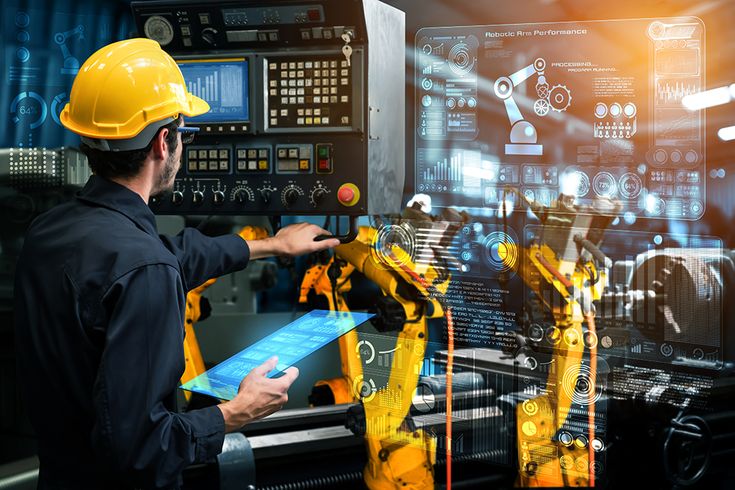
BIM and AI Integration

BIM and AI Integration: The Future of Smart, Efficient Construction

The construction industry is currently experiencing a digital revolution that is changing the way we design, build, and manage the built environment. At the forefront of this revolution are the powerful technologies of Building Information Modeling (BIM) and Artificial Intelligence (AI). Together, these technologies are not just enhancing workflows; they are enabling projects to be smarter, quicker, and greener. From design automation, to predictive planning, to safety monitoring, AI-based BIM is driving the next generation of the Architecture, Engineering, and Construction (AEC) industry. Now, let’s take a look at how BIM and AI have come together to solve traditional problems and lead to intelligent construction. Introduction to BIM and AI Integration Building Information Modeling (BIM) has changed the way practitioners work together and visualize the project. However, when you add AI, BIM takes on a new dimension. AI takes BIM and automates repetitive processes, analyzes complex datasets, and generates insights that humans may not easily be able to observe. This will allow AEC practitioners to: Improve design accuracy Reduce rework and costs Optimize project schedules Enhance sustainability and safety In short, AI makes BIM more predictive, more precise, and more powerful – initiating a new era of digital technology in construction. How BIM and AI Are Solving Traditional AEC Challenges There are some ongoing challenges in the AEC industry — design flaws, schedule delays, cost overruns, and breakdowns in communication between parties. BIM along with AI addresses these issues directly through automation, predictive insights, and data-centric decisions. 1. Enhancing Automation and Real-Time Clash Detection At one time, clash detection was one of the most labor-intensive processes in a project. But at this point, AI-powered BIM has completely changed that. The automated clash detection tool is now capable of detecting design conflicts, in real time, before they escalate into issues that are really costly when they emerge on site. AI may even suggest possible remedies, reducing the back and forth process between the teams. The integration allows architectural, structural, and MEP models to improve coordination and accuracy in the designs while the construction runs more smoothly. The payoff is faster design approvals, fewer errors on site, and material and labor cost savings.   2. Optimizing Model Accuracy and Predictive Planning AI does more than respond to data – it assimilates experience from it. By simulating past projects, AI can predict risks associated with projects (think of schedule slippage and cost overruns) and proactivity intervene (or in that matter, not reactively respond) to them. Predictive modeling will consistently improve the accuracy of forecast and pricing. Dynamic updates will keep all team members informed (from architects to marketers) in real time. The reliability of the data improves over time, which enables the BIM model to be a trusted tool for downstream uses such as fabrication and facility management. So to sum it up, AI gives project teams a crystal ball for project planning and project execution.   3. Real-World Impact: Better Decisions and Team Coordination In genuine projects, the BIM-AI blend has been able to:  Fast-track decision-making with synthesis of data and insight Prove that every member of the project team is working on the latest model, thereby reducing errors Cut the time teams spend in review cycles, and, in turn, enables project teams to focus on high-value creative and technical work By increasing collaboration between architects, engineers, and contractors, BIM-AI promotes projects delivered in a timely fashion, within budget and at a higher level of quality.   4. Data-Driven Planning and Execution AI is not only useful throughout the design phase but also for the site itself. AI technologies can, in real-time, compare the conditions on-site with those shown in the BIM models to detect and report variances or delays early on. Smart scheduling algorithms provide alerts to maximise productivity, enhancing the allocation of labour and materials, among other activities. As the construction manager/contractor relies more heavily on data-driven execution, all parties can expect fewer surprises, fewer delays, and a smoother statistical delivery. BIM-AI and the Rise of Smart Construction Artificial intelligence is fundamentally embedding itself in every tier of the construction industry. The future of intelligent, autonomous, and sustainable construction is already being established — powered by these four prominent building information modeling/artificial intelligence (BIM-AI) trends: 1.Digital Twins Digital twins are digital representations of physical assets that take real time data from Internet of Things (IoT) sensors and other digital sources. They provide project teams simulated monitoring and optimization of a building’s performance throughout its lifecycle — from design through to demolition. 2.Sustainability Optimization AI informs the analysis of materials, design stacks and heating ventilation air conditioning (HVAC) systems to effectively address a building’s carbon footprint. It aids architects and engineers’ ability to project energy use, reduce the waste, and obtain professional sustainability certifications such as LEED or BREEAM — faster. 3.Robotics and Autonomous Construction In the not-too-distant-future, robotic systems will work in concert with BIM-AI platforms — undertaking the more boring and potentially dangerous activities on a construction site autonomously. Quality and safety will improve, and speed and costs will be better managed. 4.Generative and Adaptive Design AI-powered generative design tools will have architects rapidly explore thousands of design alternatives from cost, performance, and sustainability points of view — moving towards smarter and more informed design. Enhancing Sustainability Through BIM and AI Sustainability is not a nice-to-have anymore; it is a must-have. AI has a significant role to play in making the construction industry more sustainable: It identifies low-carbon materials to minimize overall environmental impact. It optimizes HVAC systems for improved energy efficiency, sustainability, and comfort for the occupants of the space. It helps for projects to attain green building certification and eligibility for rebates faster and easier. AI will assist in establishing an overall approach of sustainability analysis early in a design process, allowing sustainability to become part of the process rather than an afterthought. Improving Safety on Construction Sites Safety continues to be a leading concern in construction sites – with the help of AI-based BIM it

BIM and AI Integration: The Future of Smart, Efficient Construction Read More »

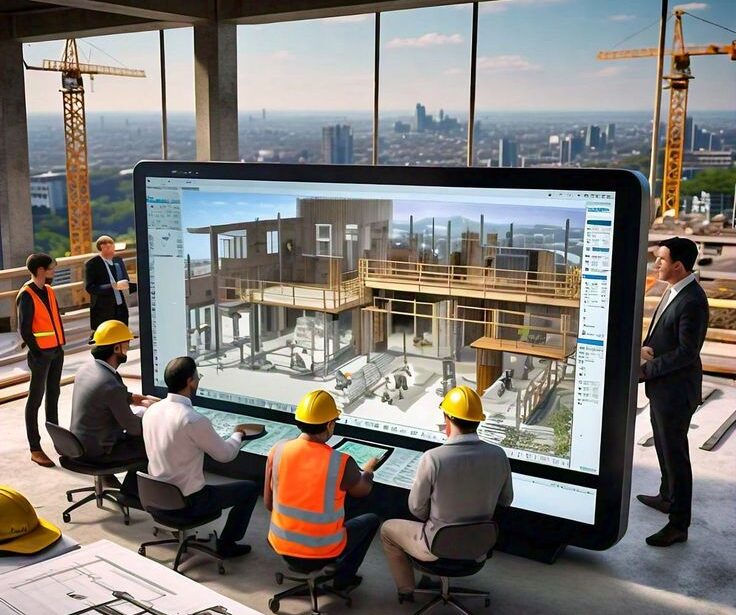
bim course online image

Top BIM Trends Shaping the AEC Industry in 2025

The field of architecture, engineering, and construction (AEC) is changing more rapidly than ever, and at the heart of this change is Building Information Modeling (BIM). What is BIM, though? In the simplest terms, BIM, which stands for Building Information Modeling, is a digital culture in which professionals design, document, and manage a project throughout its lifecycle. By developing intelligent 3D models of the space, teams can visualize and coordinate everything from design and structure to plumbing, electrical, and maintenance needs all in one place. This means that BIM is much more than just a design tool – it is the basis for digital transformation in construction, connecting people, data, and technology to streamline project delivery and create better project outcomes. Upcoming BIM Industry Trends The BIM environment is evolving quickly, as advances in technology, tools, and workflows change how people do their work. Here are some of the biggest trends that will influence the industry in 2025 and beyond. 1. Cloud-Based BIM Platforms Building Information Modeling (BIM) has changed from a boutique tool to an industry standard. One of the major changes has been the development of cloud-based BIM platforms. Teams can now easily work together to create and modify a project, even from different geographic locations. Cloud BIM also enables each stakeholder to see and access the most current information about the project. This increases overall transparency of the project and improves communication flow. This is especially useful for large multi-stakeholder projects, where coordination and versioning can be difficult. 2. Data Analytics Within BIM Up-to-date BIM models hold vast amounts of data — and organizations are now figuring out how best to use that data.  Data analytics in BIM helps project teams analyze and extract meaningful insights about project performance, leading to better decision making at every project stage. By analyzing BIM data, teams can: Forecast project risk (or delay) Spot cost and time inefficiencies Improve design quality and accuracy Combining analytics and BIM translates data into data driven, error-free workflows that make projects more predictable and efficient. 3. Sustainability and Green BIM Sustainability is now more than a buzzword — it is a duty. BIM tools are analyzing design impacts, optimizing energy performance, and selecting sustainable materials, before construction, at the concept stage.  This helps AEC professionals to design and build environmentally responsible, resource-efficient buildings that are aligned with global green standards. 4. Integration of Emerging Technologies The future of Building Information Modelling (BIM) is integration – the unification of technologies, such as Artificial Intelligence (AI), Machine Learning (ML), the Internet of Things (IoT), and more. These integrations are allowing workflows to become smarter, from predictive maintenance and automation to real-time monitoring of a smart building. The end result is a more connected, data-rich ecosystem where information can effortlessly flow from a digital environment to a physical environment. 5. Digital Twins and Asset Management Digital Twins are advancing BIM to the next stage. They are virtual copies of a physical asset, updated through real time data obtained from sensors, IoT tools and analytics tools.  This enables teams to monitor operational performance, predict concerns, and optimize operations, long after the project is finished. Tools like Autodesk Tandem are now lowering the barrier to creating and maintaining Digital Twins, providing a transition between design, construction and maintenance. 6. Generative Design Generative design employs artificial intelligence algorithms to analyze hundreds of design alternatives based on targets developed in advance such as energy performance, costs, and materials. By inputting parameters, designers and engineers receive an automatic-time optimization of their alternatives/discovery processing; multiple options would be helpful, while often suggesting resolutions unknown to the contemporary population.  This trend does not erase the human experience, but instead opens possibilities for creativity, efficiency, and sustainability in architecture and engineering design processes. 7. Extended Reality (XR), AR, and VR The emergence of Extended Reality (XR) which incorporates Augmented Reality (AR) and Virtual Reality (VR), is changing the way professionals engage with BIM models. AR makes it easy to overlay 3D models on job sites in real time to increase precision and visualization. VR offers immersive walkthroughs, allowing both clients and teams to ‘walk’ through the designs before any construction begins. By 2025, XR will become commonplace to aid on-site collaboration, training and design approval. 8. Offsite Manufacturing and Modular Construction Offsite Manufacturing and Modular Construction are becoming more prevalent as quicker, cleaner, and more sustainable ways to construct buildings. BIM is essential to this process to facilitate exact digital modeling for the factory fabrication of building pieces. This creates: Shorter timeframes Less waste Higher quality With BIM, modular construction is increasingly repeatable and more efficient – producing innovation throughout the industry. 9. BIM for Infrastructure Although BIM started with building design, it is rapidly expanding into infrastructure projects — roads, bridges, tunnels, and water systems. For civil engineers, BIM improves design coordination, project cost tracking, and lifecycle visibility. Incorporating both geospatial and environmental data in BIM environments leads to more resilient, sustainable, and data-oriented infrastructure planning. What’s Next for Architects, Civil Engineers, and MEP Engineers For Architects The future of architecture is intrinsically linked to BIM. Architects will increasingly leverage generative design, performance simulation, and sustainability analysis in order to arrive at smarter, more efficient designs. In addition, architects will also be responsible for defining data standards and maintaining BIM models that are accurate, accessible, and valuable throughout the entire lifecycle of the project. For Civil Engineers Civil engineers are now utilizing BIM to execute and manage transportation networks, utilities, and other large-scale infrastructure projects. Civil engineers must understand how to tie 3D models into geospatial data, which will allow for accurate planning and maintenance of infrastructure assets over time. BIM will also support civil engineers in creating digital twins of infrastructure assets which can be used for long-term monitoring and predictive maintenance of infrastructure assets.  For MEP Engineers For MEP professionals, BIM provides unparalleled accuracy and coordination among engineers. Working in a single shared design model allows MEP engineers to reduce clashes and

Top BIM Trends Shaping the AEC Industry in 2025 Read More »

navi mumbai international airport image

How BIM & Digital Twin Are Building India’s First Fully Digital Airport – Navi Mumbai International Airport

Introduction India is evolving faster than ever, especially in infrastructure, and at its epicenter, it is the Navi Mumbai International Airport (NMIA) – a ground-breaking project involving innovation, technology, and sustainability.  However, what makes NMIA truly innovative is not the size of the project or how modern it might look, it is how Building Information Modeling (BIM) and Digital Twin technology is being deployed, creating India’s very first fully digital airport,  Let us ask: How are they building the future of airport design?  Why would it be prudent for you to learn BIM today?  What Makes Navi Mumbai Airport a “Digital Airport”? The Navi Mumbai International Airport, a project by Adani Airports, is anticipated to host 90 million passengers each year when the project is complete. But besides the numbers, it has an underlying digital backbone that is what makes it special. From day one, engineers have mapped out every inch of this massive airport using BIM and Digital Twin tools – runways, terminals, parking, drainage, and utilities. Every system is integrated which enables the design, contractor, and operations teams to work together seamlessly. Key Features: India’s first fully digital and sustainable airport BIM technology from Trimble is used in the design process and project coordination Built using AI-enabled facility management systems Aims for net-zero energy Incorporates real-time performance measured using the Digital Twin Understanding BIM – The Digital Foundation Building Information Modeling (BIM) is revolutionizing the construction process. Rather than relying on isolated 2D drawings, BIM permits architects, engineers, and builders to collaborate in one smart 3D model containing all information about the project. At Navi Mumbai Airport, BIM is employed to: Catch and resolve design clashes upfront  Create accurate estimates of cost and quantity (otherwise known as 5D BIM) Assist interdisciplinary coordination  Simulate construction prior to construction  Plan safe, efficient on-site execution  In short, BIM gives the project team the ability to “digitally build” before the real world build begins — saving time, funds, and a lot of rework. Digital Twin – The Living Version of BIM Whenever BIM generates the digital design, the Digital Twin keeps the design system dynamically alive. A Digital Twin is a digital duplicate of the physical airport — connected to live data from sensors, IoT devices and systems within the facility. This design technology will allow the airport team to understand and monitor things such as energy use, temperature fluctuations, equipment performance and passenger flow in real time. At Navi Mumbai Airport, the Digital Twin will: Constantly track the power, lighting and HVAC systems Predict maintenance before problems arise Produce a sense of sustainability through energy consumption Increase the passenger experience through data-informed insight The combined power of BIM and Digital Twin creates a rich digital ecosystem that makes the airport smarter, safer and more efficient — from the design process and into day-to-day operations. The Benefits of Using BIM and Digital Twin in NMIA Enhanced Design & Planning Using BIM, designers will be able to make better informed, data-driven decisions. All systems are virtually tested before construction begins, from the terminal design to the baggage handling system. Cost & Time Savings Through the integration of design with schedule (4D) and cost (5D) data, BIM can help with accurate scheduling and budgeting, which reduces the need to make costly changes during the construction process. Better Team Collaboration Everyone who has a role on the project — architect, structural engineer, contractor and authorities — will work collaboratively on one single, coordinated model. This will help to avoid misunderstandings and speed up approvals. Sustainability Goals Energy-modeling with BIM will help minimize waste and design, plan, and construct for net-zero carbon operations.        5.Smarter airport operations Once fully operational, the Digital Twin will allow the asset to be managed, maintenance predictions and improved passenger safety — ultimately leading to a smart airport experience. Trimble’s role in developing Digital Airport Tech Company Trimble has played a big part in NMIA creating the digital airport. Using platforms like Tekla Structures, Trimble connect and geospatial data integration, teams have been able design, coordinate and deliver construction projects with accuracy. Having this digital-first approach helps to ensure that the most complex structures — from steel members to MEP systems — fit together perfectly on site while avoiding construction mistakes and speeding up delivery time. India’s Digital Infrastructure Revolution Navi Mumbai Airport is situated in a much broader movement — India’s transition to smart and sustainable infrastructure. Government programs such as Gati Shakti, Smart Cities Mission, and Digital India are supporting BIM and Digital Twin technology adoption in highways, bridges, metros, and airports. Digital construction is changing the way India builds, from the Delhi Metro to the Pune Metro and now NMIA. Why BIM Skills Are the Future Now that more projects are utilizing a digital workflow, there is now a very high demand for BIM professionals with experience. Regardless of whether you are a civil engineer, structural designer, or architect, learning to use BIM tools can help you unlock new opportunities across the globe.  Here are the top BIM Careers:  BIM Engineer / Modeler Revit / Tekla Specialist BIM Coordinator or BIM Manager Digital Twin Analyst Infrastructure BIM Designer Build Your BIM Career with Castallio At Castallio, we train you to think and work like a BIM professional, not just teach you software.  Some outcomes to expect in our Professional BIM Management Program are: – Use of Revit, Navisworks, Tekla, Civil 3D, and InfraWorks – Working with large scale projects: Airports, Bridges, Highways – Exposure to the emerging world of Digital Twins – Jobs with top engineering firms You will learn the knowledge and skills that firms like Adani, L&T, and AECOM are looking for. You will work on projects such as the Navi Mumbai International Airport and more. Final Thoughts The Navi Mumbai airport is not just any mega project, it is part of India’s vision to a connected, intelligent, sustainable future and framework. As BIM and Digital Twin technology act as the vanguard, the

How BIM & Digital Twin Are Building India’s First Fully Digital Airport – Navi Mumbai International Airport Read More »

image

Top 10 BIM Tools Every Civil Engineer Should Learn in 2025

Introduction The field of civil engineering is evolving rapidly. Emerging technologies are shifting how we design, build and maintain structures — and one of the most disruptive technologies is Building Information Modelling (BIM). Think of BIM as a digital twin of a construction project — a smart, living model that includes not just the geometry of the project, but also all the information about materials, costs , schedules etc., right through to maintenance. BIM allows engineers, architects and contractors to collaborate in a way that is more efficient, smarter and much less error-prone. For civil engineers, using BIM is no longer an innovation, it is now necessary. It does not matter if you are designing a bridge, a road or a whole city infrastructure, BIM is becoming the industry standard. In this article we will take a look at why BIM is important, its advantages, and we will highlight the 10 best BIM tools for every civil engineer to learn in order to future-proof your career in 2025. What is BIM for Civil Engineers? BIM is not only a software program — it is a method that will revolutionize the way civil engineers practice. You go from having static connections and drawings to a live 3D model that you can rotate and modify as the project develops. These models use accurate geometry, data and specifications on how it was fabricated, cost, schedules, etc. They can help engineers to visualize projects before they are built, and change them if needed in real-time. This level of accuracy saves time, money and ultimately prevents costly mistakes during construction. How BIM is Used in Civil Engineering BIM has many functions that can make life easier for civil engineers:   Better design and visualization – BIM enables engineers to create realistic 3D models that help the team visualize the complete project and identify issues earlier. Enhanced Collaboration – Team members will be communicating with each other better based on the spirit of a shared digital model that mitigates the possibility of misunderstandings. Information Consolidation – BIM consolidates all project information in one digital environment, which allows team members to work with the most accurate and up to date information. Clash Detection – While seeing conflicts between systems is possible with 2D drawings, BIM allows all conflicts to be identified before it becomes an expensive change to manage on the jobsite. Cost Estimation – Cost data can be linked directly to the 3D model and driven by the changes in the model for tracking budgets in real time. Why BIM Matters for Civil Engineers BIM is more than a fad. It provides real and quantifiable benefits: – Enhanced Collaboration- Everyone is working off of one model diminishing confusion and improving the project’s rhythm.  – Higher Quality Projects- BIM helps to discover design flaws and safety risks early. – Faster, Cheaper Construction- Work can be completed more quickly and with less rework due to early problem discovery. – Environmental Sustainability- BIM models are helpful to identify environmental impacts and design solutions to limit the impacts during the design process. – Maintenance- BIM models are beneficial tools for facilities management long after the project has been constructed. For example, BIM was used to coordinate complex systems on the Burj Khalifa’s construction, showing its power in delivering sizeable, quality projects. Is Learning BIM Worth It? Absolutely Not. There is certainly a global increase in demand for BIM capabilities. It is reflected in job opportunities, pay, and the types of projects engineers are involved in. Engineers who are familiar with BIM are not just designers, they are partners in collaboration, troubleshooting, and leadership. Top 10 BIM Software Tools for Civil Engineers in 2025 The following are the Bim tools you need to be informed of to keep up with the trend: 1.Autodesk Revit A strong BIM platform for architectural design, Revit integrates the high-end parametric modelling and also the communication functions you require. 2.AutoCAD Civil 3D Perfect for the design of roads, land development and drainage, it also has an excellent documentation feature. 3.Tekla Structures Tekla is the expert of structural design and provides the most precise modelling, clash detection, and fabrication capabilities. 4.Bentley Systems It comes with MicroStation (3D modelling/coordination), OpenRoads Designer (road design), and ProjectWise (collaboration tools). 5.ArchiCAD A designer-friendly program with the best visualization, everyone from the professional fields can use ArchiCAD for multidisciplinary projects. 6.InfraWorks Nice for the preliminary design and the study of the project’s viability especially in the case of big infrastructure projects. 7.Allplan Engineering All plan is a project design that includes all the phases of design and the control of its cost. 8.OpenBuildings Designer OpenBuildings Designer is a unified product for architectural, structural, mechanical, and electrical design; perfect for complicated projects. 9.Vectorworks Landmark Vectorworks is for Landscape and Site Planning; Modelling and Sustainability are also its strong points. 10.Navisworks It is a project review & clash detection, and simulation tool that helps the teams to become more effective. Best BIM Courses for Civil Engineers in 2025 If you are seeking to become proficient in BIM, you should check out the following courses: The BIM Professional Course offered by Novatr – a comprehensive course, with projects to apply learning in Revit and numerous BIM tools. BIM Ready (Arch + Structure) through Techno Struct Academy – this program focuses on a class based course following architectural and structural BIM workflows. The BIM Course from Capricot – a full course offering training and resources suitable for all levels of BIM skill, including clash detection and project management. Conclusion BIM is changing civil engineering for the better. Collaboration amongst team members is improved, reduced errors, time and cost savings, and more sustainable buildings are being constructed. Civil engineers will lead the way into the future of construction when skilled with BIM tools such as Revit, Civil 3D and Tekla Structures.

Top 10 BIM Tools Every Civil Engineer Should Learn in 2025 Read More »

India’s First Nagpur Metro and Bangalore International AirportBIM-based projects marked the beginning of large-scale Building Information Modeling (BIM) adoption.

India’s First BIM Projects: Nagpur Metro & Bangalore Airport Here’s a more detailed about BIM projects and adoption of Building Information Implementation Nagpur Metro- 5D BIM and ERP – Digital Construction Project Management for Nagpur Metro Rail Project in India Nagpur city is the winter capital of the state of Maharashtra. The Nagpur Metro Rail Project will consist of 38.215 Km metro corridor, 38 stations and 2 Depots. The entire stretch will be divided into 2 alignments or corridors. Dr. Brijesh Dixit, Managing Director Maharashtra Metro Rail Corporation Limited India’s first 5D BIM implementation project aims to reduce cost overruns and delays, improve quality and safety, and create a collaborative environment for all stakeholders. The 5D BIM platform serves as a unified collaborative space for all participants, including contractors, consultants, and the Nagpur Metro Rail Corporation Limited (NMRCL). Bangalore International Airport (BIAL) For Terminal 2 Bangalore International Airport Limited (BIAL) utilized Building Information Modeling (BIM) extensively during the construction of Terminal 2 (T2) for design, planning, and project execution. To design and build the second terminal for Kempegowda International Airport in Bengaluru, BIAL relied on Autodesk solutions to achieve ambitious design and timeline goals. THE CHALLENGES: Nagpur Metro- 5D BIM and ERP – Digital Construction Project Management for Nagpur Metro Rail Project in India Key Applications of BIM at Bangalore Airport: Design and Planning:  BIM facilitated seamless coordination among designers, engineers, and contractors for Terminal 2. This allowed for the early identification and resolution of potential design issues. Construction: BIM enabled the project team to visualize the terminal in 3D, which helped in identifying potential problems during the construction phase. Necessary adjustments were made before construction began. Facility Management: The BIM model serves as the foundation for facility management, ensuring efficient maintenance and operations after the terminal’s completion. Collaboration:  BIM Collaborate Pro facilitated real-time collaboration among various teams, enhancing information sharing and reducing delays. Sustainability: The project integrated sustainable design principles, including the utilization of renewable energy sources and effective water management systems. Digital Twin Platform: A digital twin platform based on Autodesk Forge has been implemented for asset management, allowing BIAL to track and visualize asset data effectively.

India’s First Nagpur Metro and Bangalore International AirportBIM-based projects marked the beginning of large-scale Building Information Modeling (BIM) adoption. Read More »

What Is a BIM Course? A Complete Guide for Beginners & Professionals image

What Is a BIM Course? A Complete Guide for Beginners & Professionals

What Is a BIM Course? A Complete Guide for Beginners & Professionals In the ever-evolving domains of construction and infrastructure, Building Information Modeling (BIM) is no longer simply a ‘buzzword’ — it is a worldwide, industry standard. Consider high-rise buildings in Mumbai or a metropolitan rail project in Bangalore — BIM is changing the way engineers, architects, and construction professionals design, coordinate and delivery projects.  Have you been pondering “What is a BIM course and why should I take it?” With this comprehensive guide, you will have all the answers. Whether as a civil engineering student you want to learn BIM hoping it will assist in your career growth or to get a global opportunity, you are in the right place. What Is BIM? BIM represents Building Information Modeling — a methodology employing 3D models enriched with information to plan, design, create, and operate buildings and infrastructure. In contrast to conventional 2D drawings, BIM allows: Collaboration in real-time between architects, engineers, and contractors Conflict detection to avoid expensive mistakes Improved efficiency and sustainability of individual projects From the UK to the UAE, USA, Germany, India, they are all requiring mega projects to use BIM, causing the demand for skilled BIM practitioners to increase significantly. What Is a BIM Course? A BIM course is a planned educational experience that teaches the tools, workflows, and strategies of Building Information Modeling. At professional institutes like Castallio, BIM courses include: – Revit Architecture & Structure – AutoCAD Civil 3D – Navisworks (Clash Detection & Coordination) – STAAD RCDC & ETABS (Structural Design) – Dynamo & BIM 360 for collaboration – Real-world project workflows (Metro, Highways, Airports, Bridges) In short, a BIM course aligns academic knowledge to a real-world industry need. Who Should Take a BIM Course? A BIM course is appropriate for: Civil Engineers → Progress in structural design & construction.Architects → Enhance visualization & project organization.Freshers & Students → Acquire job-specific, high-demand skills.Working Professionals → Upskill for international project opportunities. BIM Courses in India: Growing Demand India is rapidly emerging as a hub for BIM adoption, particularly in cities where metro, IT parks, smart cities, and airports are thriving. BIM Course in Pune → High demand owing to IT parks, real estate, and metro projects. BIM Course in Bangalore → A hub of smart city projects and multinational engineering consultancies. BIM Course in Chennai → Increasing demand in ports, highways, and industrial development. BIM Course in Mumbai → Skyscrapers, coastal highways, and metro extensions need BIM-trained professionals. Looking for “BIM course near me” tends to position Castallio in the top search results due to its industry-oriented training. BIM Online Courses – Learn Anytime, Anywhere Not all are able to go for offline classes. That is why BIM online courses are gaining much popularity. With online BIM training, you are able to:Learn from master mentors at your paceWatch live + recorded sessionsDo international projectsConnect with international peers That flexibility makes online BIM courses in India the ideal option for working professionals. Best BIM Training Institute in India When selecting the top BIM training center in India, consider:Experienced industry trainersPlacement assistance with actual connectionsCurrent syllabus with 8+ BIM softwareLive international projectsFlexibility to learn (online + offline) Castallio is one of the top BIM centers offering professional-ready BIM courses for beginners as well as professionals. BIM Course for Civil Engineers For civil engineers, BIM is now a must. From structural analysis to quantity surveying, BIM skills lead to a career in: Infrastructure firms International design consultancies Government smart city initiatives International postings (Middle East & Europe) A BIM civil engineering course ensures that fresh graduates find employment with better pay compared to CAD skills alone. BIM Course with Placement Support One of the biggest concerns for students is getting placed after training. That’s why a BIM course with placement is a game-changer. At Castallio, we offer:100% placement supportResume preparation & mock interviewsDirect industry referralsLifetime mentorship This way, not only do you learn BIM but also begin your career as a BIM Engineer, Coordinator, or Structural Designer. Career Opportunities After a BIM Course Once you finish a BIM course, you can opt for jobs such as: BIM Engineer / Coordinator Revit Modeler (Structure / Architecture) Civil 3D Designer Structural Engineer (BIM) BIM Manager / Digital Project Manager Salary Range → Indian freshers earn ₹4–6 LPA, whereas experienced BIM Managers earn ₹15–20 LPA or even higher internationally. Why Castallio for BIM Courses? We don’t merely instruct software at Castallio — we equip you with the actual industry challenges. International project exposure (UAE, UK, Germany)Industry experts mentorshipOnline + offline flexible learningCertified recognitionCareer support for life Conclusion A BIM course is more than a certificate — it’s your passport to global opportunities in the construction and infrastructure sector. Whether you’re searching for a BIM course in Pune, Bangalore, Chennai, or Mumbai, or looking for the best BIM training institute in India, Castallio offers the right mix of skills, mentorship, and placement support to shape your career. Ready to begin your journey?Check out our program: Advance BIM Fundamental for Professionals

What Is a BIM Course? A Complete Guide for Beginners & Professionals Read More »