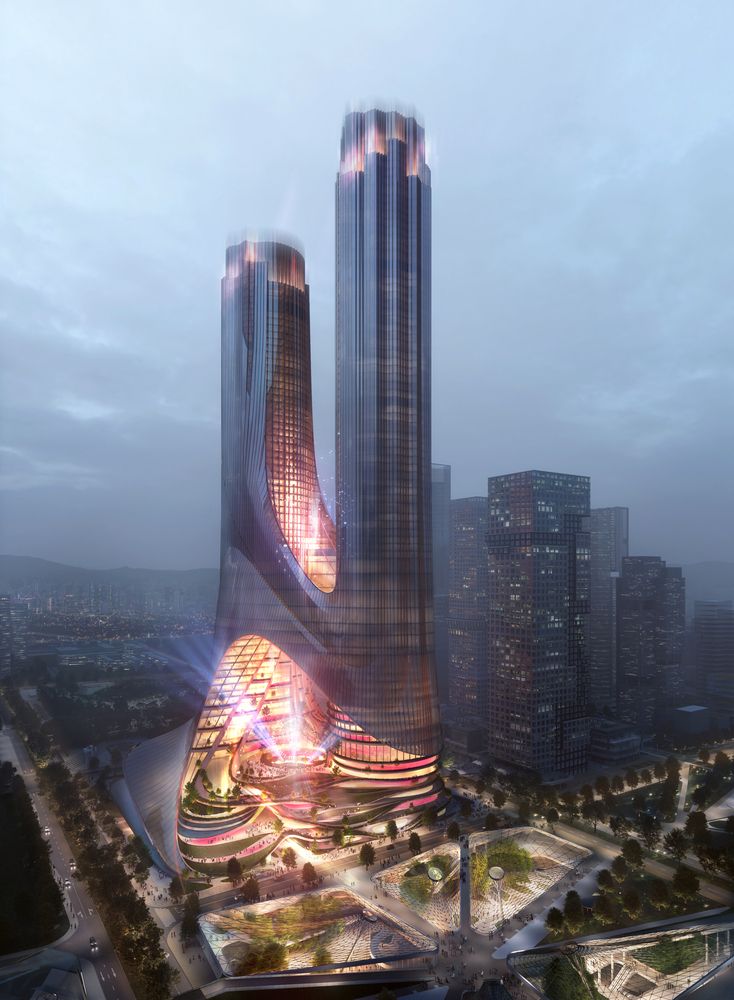
To the constantly innovating metropolis of Shenzhen, the city architecture is one of the top things that’s pushing beyond the limits in terms of trend and also ecological factors. Zaha Hadid Architects (ZHA) created Tower C to be one of the most outstanding elements of its future urban living concept: a building that combines aesthetics, technology, and eco-friendly design all in one stunning figure.
Located in the Shenzhen Bay Super Headquarters Base, Tower C is more than just a high-rise with numerous floors. It is a digital-age triumph which demonstrates how parameter design, BIM (Building Information Modeling) technology, and eco-friendly mechanisms can be united to give rise to the next generation of smart cities.
A Vision of Flow and Function
Futuristic and at the same time practical, neat and simple in design though a complex structure, this is the typical approach that Zaha Hadid Architects have been taking over the years. In this case, the story is not different – with its fluid, natural shape, the Tower C is a metaphor of motion and progress, thus nodding to the fast growth of Shenzhen into a worldwide technological powerhouse.
The scope of work includes the creation of two separately standing but clubbed together towers with a height exceeding 400 meters each. These buildings thus constitute a vertical city comprising office spaces, shopping areas, ect. Lourry, sports were, and even park terraces – all interlinked via sky bridges and green rooftops/shores.
The art of this is not just phenomenal but actually crafting a real concept of a breathing, adapting, and living building that can communicate with nature and its neighboring buildings.
Parametric Design: The Science of Shape
One of the main features in the architecture of the Tower C is the parametric design which is a digital tool that facilitates the designers to alter the form of the building based on the data and the set objectives.
The ZHA design team used computational design tools to study the air movement of the building, as well as its solar energy intake, and structural performance. They have shaped the curved geometry of Tower C not only to give an artistic appeal but also to optimize it for wind resistance, daylight, and energy efficiency.
By their tapering towers and adaptable façades, the architects decrease wind pressure and simultaneously let in more daylight. High-tech glazing and a responsive shading system contribute to energy savings, thus, confirming that one doesn’t have to compromise the other.
The Power of BIM in Design and Construction
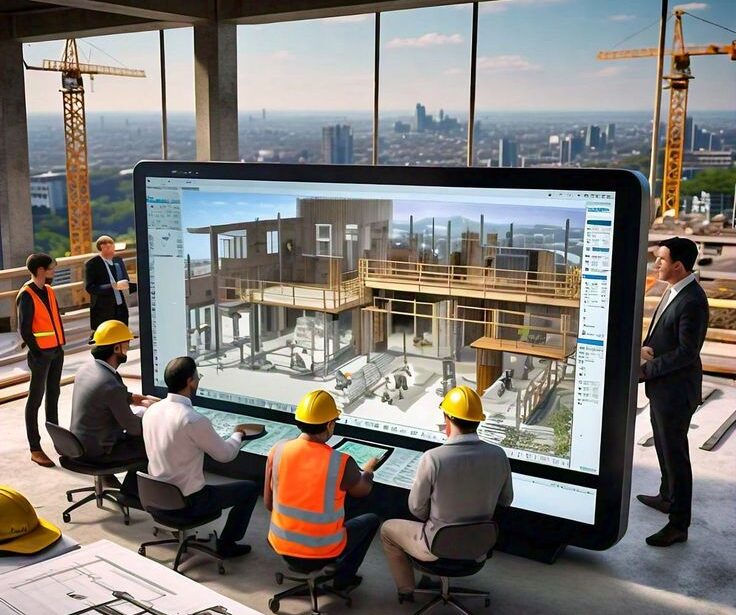
One complex project as such of Tower C would have been unfeasible without the help of Building Information Modeling (BIM) – the digital core of its design and implementation.
BIM made it possible for the different stakeholders involved in the project: the architects, the engineers, and the contractors to work together in the real-time, thus ensuring that every detail – from the façade curves to the internal MEP systems – was in harmony and there were no clashes.
Harnessing the power of BIM, the architects at ZHA could:
Simulate energy and daylight performance
Optimize material usage and cost
Coordinate complex systems digitally
Plan predictive maintenance before construction even began
Tower C is the story of how BIM can be used to great success in many ways, thus, it is a perfect example of how data-driven design can become a source of precision, efficiency, and sustainability in present-day architecture.
Sustainability at Every Level
By no means a design to just impress, but to inspire a shift toward eco-responsive high-rise design, the Tower C was conceived by Zaha Hadid Architects.
The green features of the building are some of its key:
Double-skin façades that help keep the temperature under control naturally
Rainwater harvesting and greywater recycling systems
Photovoltaic panels for the generation of clean energy
Smart sensors that help in monitoring and reducing energy consumption
With such measures, Tower C is compatible with China’s carbon-neutrality targets and is aiming at obtaining the highest-level sustainability certifications like LEED Platinum.
AI and Smart Systems Integration
What mainly differentiates the incorporation of AI and IoT technologies in core systems of Tower C is how it is realized practically.
Artificial intelligence enables the building to ‘think’ — for instance, it can adjust the lighting, ventilation, and temperature according to the occupancy of an area and external factors. Predictive algorithms are used for maintenance tasks by means of which they lessen the stops for maintenance and increase the lifespan of the equipment.
This AI + BIM + IoT synergy makes the building a living, learning entity which adapts to the changes in its surroundings and the needs of its users.
A Landmark for a Smart City
As a city, Shenzhen is always changing with new technology and new designs, and Tower C is a perfect example of that change.
It is a visually impressive structure arising from the Bay Super Headquarters Base. It is essentially a gateway linking not only the Qianhai District and Shenzhen Bay but business, culture, and public life as well. With open plazas, gardens, and transit links, the podium level is designed to be an access point to the city for people, hence, it is a place where the public can interact and the corporate tower is closed minimally if at all.
Tower C is probably the most convincing argument of how architecture can integrate city life, sustainability, and smart technology without creating any barriers — thus, the building is setting a standard for the skyscrapers of the future all over the world.
The Design Philosophy Behind the Masterpiece
Zaha Hadid Architects are consistent with one design philosophy for all their work which is based on fluidity, performance, and adaptability. The common attributes of their projects which include Leeza SOHO in Beijing, Galaxy SOHO, and Guangzhou Opera House are dynamic forms shaped by digital intelligence.
In the case of Tower C, the main idea is manifested by the architecture of the building with its sleek aerodynamic curves and data-responsive design, thus, it is both a sculptural and a sustainable structure.
By using parametric logic, ZHA makes sure that every curve is doing something — cutting down on energy usage, structural performance, and visual identity. It’s architecture that is ahead of the game and does the thinking before the building comes.
Structural Innovation and Smart Engineering
The design of the Tower C structure is quite amazing—just like its appearance.
To resist strong winds and earthquakes, the double-tower building employs mega-columns, an outrigger system, and a central core. Besides making the building more stable, the skybridges connecting the towers offer panoramic viewing decks and social spaces — thus, changing the way people immerse themselves in the height of a building.
Such a mix of substance and style is proof that engineering marvel is the main factor that leads to the architectural charm.
What Students and Young Architects Can Learn
For architects and engineers of tomorrow, the example of Tower C goes far beyond the inspirational level. It is, in fact, a study of the coming design practice paradigm.
Professionals must master the following in order to handle such projects:
Revit and sophisticated BIM workflows
Parametric modeling software such as Rhino and Grasshopper
Green design principles and climate-adaptive planning
In case you want to be a high-performance building design expert, taking a BIM Professional Course for Architects will help you acquire complete practical skills with which you can intelligently and purposefully design.
Conclusion
The Zaha Hadid Architects’ Tower C is not only changing the skyline of Shenzhen but also influencing the urban skyscraper concept transformation.
It leads to the vision where art, data, and environmental concern are seamlessly integrated into one living entity — the prototype of future smart, human-centric cities.
ZHA did not only build a parametric design, BIM- and AI-powered building; instead, they created a futuristic digital architecture vision that is responsive to its environment.
When intelligent design becomes more and more prominent, Tower C can be considered as one of the leading projects that successfully employed technology and creativity not only to build towers but also to pave the way for a smarter, more sustainable future.