
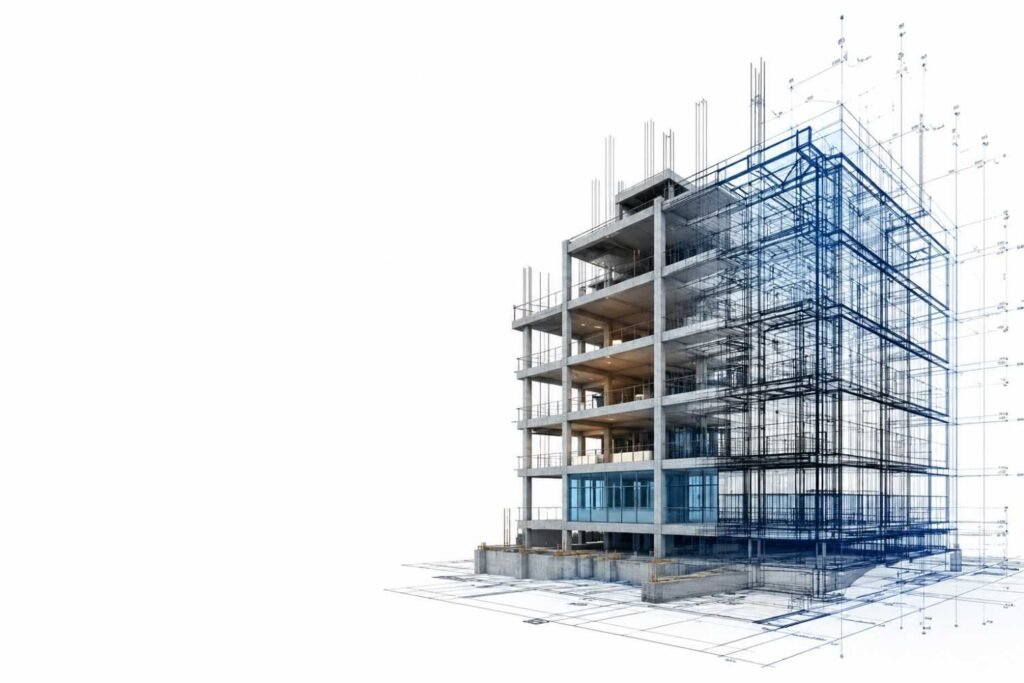
Structural Engineer Career in 2026: Why This Design Job Is Booming
Introduction
A structural engineer career sits at the exact intersection of math, physics, and real-world consequence. Every beam, column, and load path you calculate holds up an actual building, bridge, or stadium — and that responsibility is exactly why this job pays well and stays in demand.
So why does this role keep attracting engineering graduates every year? In short, it combines steady demand with a legal monopoly few other careers offer. According to Glassdoor’s 2026 data, the average structural engineer salary in the United States sits at $135,384 per year, with top earners crossing $170,382 annually. Meanwhile, federal projections call for 5% employment growth for civil and structural engineers from 2024 to 2034, adding roughly 23,600 openings a year. That’s not explosive growth, but it’s remarkably stable — and stability matters when you’re planning a career, not just a job.
What a Structural Engineer Actually Does
At its core, a structural engineer career revolves around one question: will this structure survive the loads placed on it? That includes gravity loads, wind loads, seismic forces, and material stress over decades of use.
Day to day, structural engineers:
- Calculate load paths for beams, columns, slabs, and foundations
- Run finite element analysis (FEA) to test how structures behave under stress
- Coordinate with architects and MEP teams to resolve design conflicts
- Use software like Autodesk Revit Structure, Bentley STAAD, and RISA 3D
- Review construction drawings and inspect completed work for code compliance
Additionally, beam design forms one of the earliest and most fundamental skills in this field. Every structural engineer starts here, calculating bending moments, shear forces, and deflection limits before moving on to full building systems.
Why Structural Engineering Pays So Well in 2026
Here’s where the numbers get interesting. Multiple sources point to strong, if slightly varied, compensation depending on specialization and location.
- PayScale reports an average structural engineer salary of $83,657 in 2026, with entry-level professionals earning around $69,655 and early-career engineers (1-4 years) averaging $77,769.
- Glassdoor places the broader “Structural Engineering” category average considerably higher, at $177,144 annually, driven by specialized and senior roles.
- Structural Design Engineers specifically average $117,749 per year according to Glassdoor, with top performers earning up to $229,962 at the highest seniority levels.
So why the range? Specialization matters enormously. According to PayScale, certain structural engineer specialties — structural analysis, stress analysis, and forensic engineering — tend to pay more than general practice. California, in particular, stands out for high pay, driven by seismic code requirements and constant urban development.
In India, the picture looks different but equally promising. According to Manavrachna University’s 2026 career guide, civil and structural engineering remains driven by long-term national infrastructure needs rather than short-term industry trends — which means demand doesn’t disappear during economic slowdowns the way it does in more cyclical fields.
Why This Job Isn’t Going Anywhere (Even With AI)
A fair question deserves a direct answer: does AI threaten a structural engineer career? Not in the way people assume.
Licensure gives structural engineers something software can’t replicate — a legal monopoly on signing off on drawings. That stamp carries legal liability, and no AI tool can assume that responsibility. As a result, the profession has a built-in floor that pure software or coding careers simply don’t have.
Additionally, much of the demand ties directly to aging infrastructure. Bridges, water systems, dams, and buildings built decades ago now need repair, reinforcement, or complete replacement. That work doesn’t go away — it accumulates. Consequently, most job openings in this field come from workers retiring or switching roles, not brand-new positions, which points to a healthy, sustainable churn rate rather than a bubble.
What This Means for You
If you’re weighing a structural engineer career, here’s the practical roadmap.
- Build strong fundamentals in beam and column design first. Everything else — slabs, foundations, lateral systems — builds on this base.
- Learn BIM software alongside traditional calculations. Firms increasingly expect Revit Structure and coordination skills, not just hand calculations or basic AutoCAD.
- Pursue licensure as early as your jurisdiction allows. The PE stamp is your strongest long-term salary lever and your best protection against automation.
- Specialize once you have 3-5 years of general experience. Seismic design, forensic engineering, or bridge structures often command premium pay over generalist roles.
If you want to fast-track the BIM side of this equation, Castallio’s Advance Structural Design Using ETABS, STAAD, RCDC & Revit course is built exactly for this role — a 3-month program covering the specific software stack structural and beam-design engineers use daily, taught through live 1-to-1 mentorship instead of recorded lectures you’ll never finish.
Structural Engineer vs. Other Civil Engineering Paths
So how does this role compare to adjacent careers? Structural engineering tends to offer a steadier, more code-driven path than general civil engineering, with less exposure to site management chaos but more emphasis on calculations and liability. Compared to MEP engineering, structural roles focus purely on load-bearing systems rather than mechanical, electrical, or plumbing coordination. And compared to BIM-focused roles, structural engineering keeps a stronger foundation in physics and code compliance, even as BIM tools become part of daily workflow.
In short, if you enjoy precise calculations, code compliance, and long-term responsibility over a structure’s safety, this remains one of the most stable specializations within civil engineering.
Conclusion: A Career Built to Last
A structural engineer career won’t make you rich overnight, but it offers something increasingly rare: durable demand, legal protection through licensure, and a clear path from beam-level calculations to senior specialization. As infrastructure ages and cities keep expanding, the need for engineers who can certify that a structure is safe isn’t going anywhere.
Ready to build the BIM skills that accelerate a structural engineering career? Explore Castallio’s BIM courses → and start with the Advance Structural Design Course using ETABS, STAAD, RCDC, and Revit.